

TECHM4INDIA

Engineering imagination into impact.

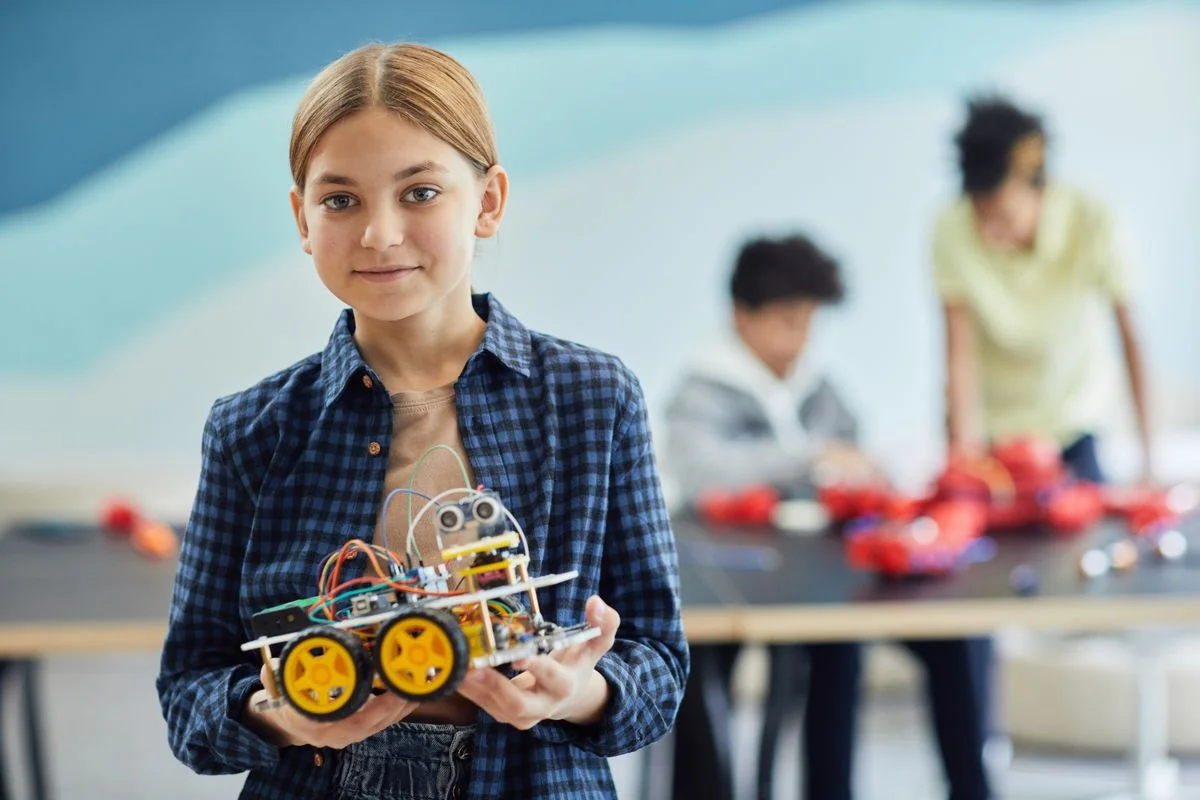
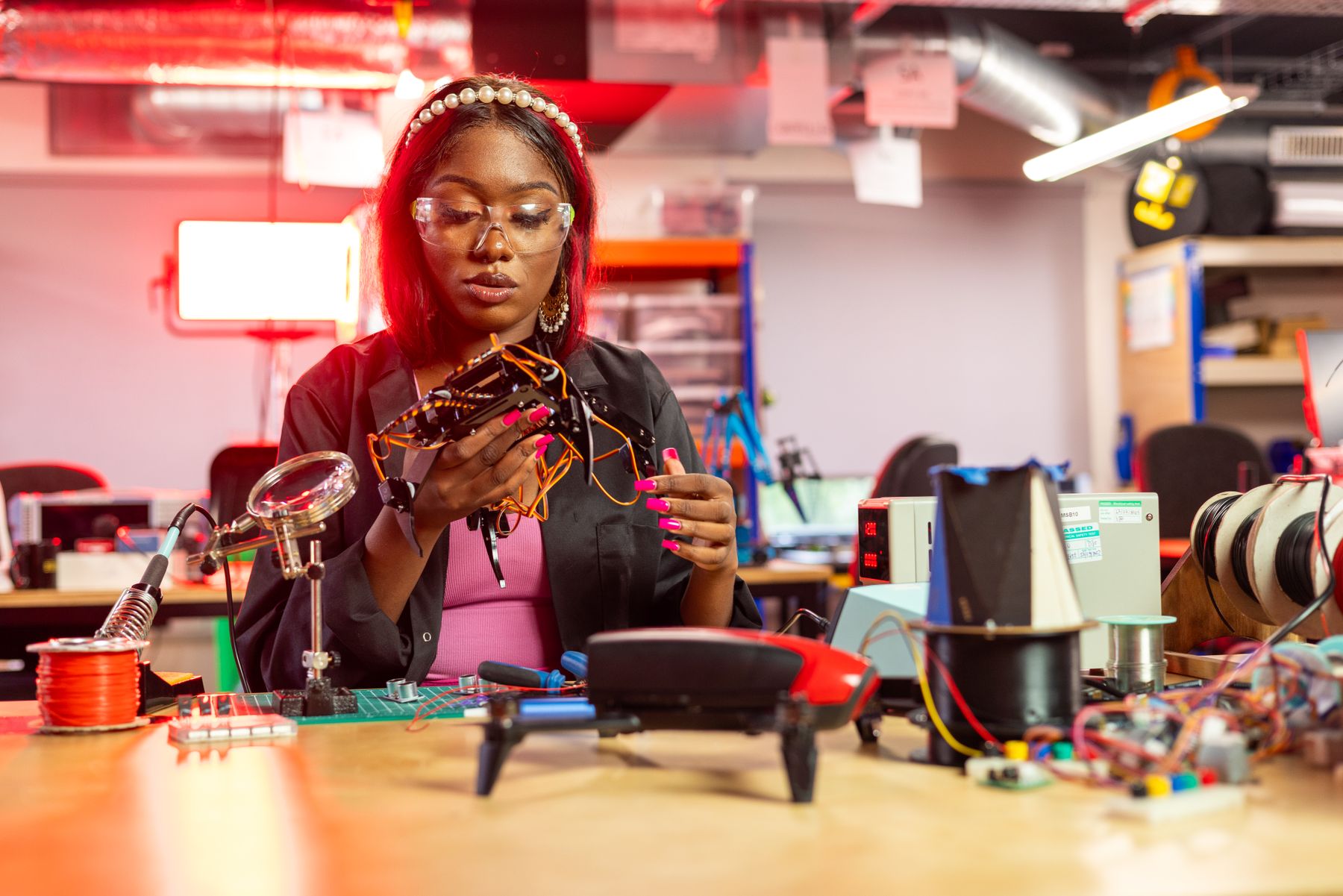
Student holding a robot they built in a classroom
Illustrative robotics learning photograph
TechM4Schools

From curiosity to capability, one working build at a time.

TechM4Schools brings labs, structured programmes, learning kits and mentors into the school day, so a student who is curious about technology gets the chance to practise it, build with it and eventually lead with it.

Follow the student journey
Three school students reading together at a library tableIllustrative school photograph

Why choose TechM4Schools?

TechM4Schools brings structured innovation ecosystems, experiential learning environments and career-oriented technology programmes directly into schools, so students practise technology instead of only reading about it.

  • Skill-based curriculumHands-on activities and STEM modules designed with an interdisciplinary approach, so students build a usable language for the technologies around them.
  • Experiential learningStudents learn by doing: practical activities, collaborative projects, innovation challenges and experiments. A brief, a kit, a team and a prototype.
  • Composite skill laboratoriesA dedicated space where coding, robotics, drones, AI and making sit beside one another.
  • End-to-end implementationA partner for school leadership from first conversation to daily programme rhythm, including the support listed alongside.
Our programmes

Innovate Bharath: ideas that get funded

Innovate Bharath is a TechM4Schools programme for ideas that come from students themselves. Students put their ideas forward, and the strongest are selected and funded.

  • 1,200+students took part in Innovate Bharath
  • 8unique ideas selected and funded

Dates, participating schools and the funded ideas themselves are shared by the team on request.

  1. 1

    Students propose

    The ideas come from the students themselves.

  2. 2

    The strongest are selected

    From everything proposed, the strongest ideas are selected.

  3. 3

    Selected ideas are funded

    Each selected idea receives funding.

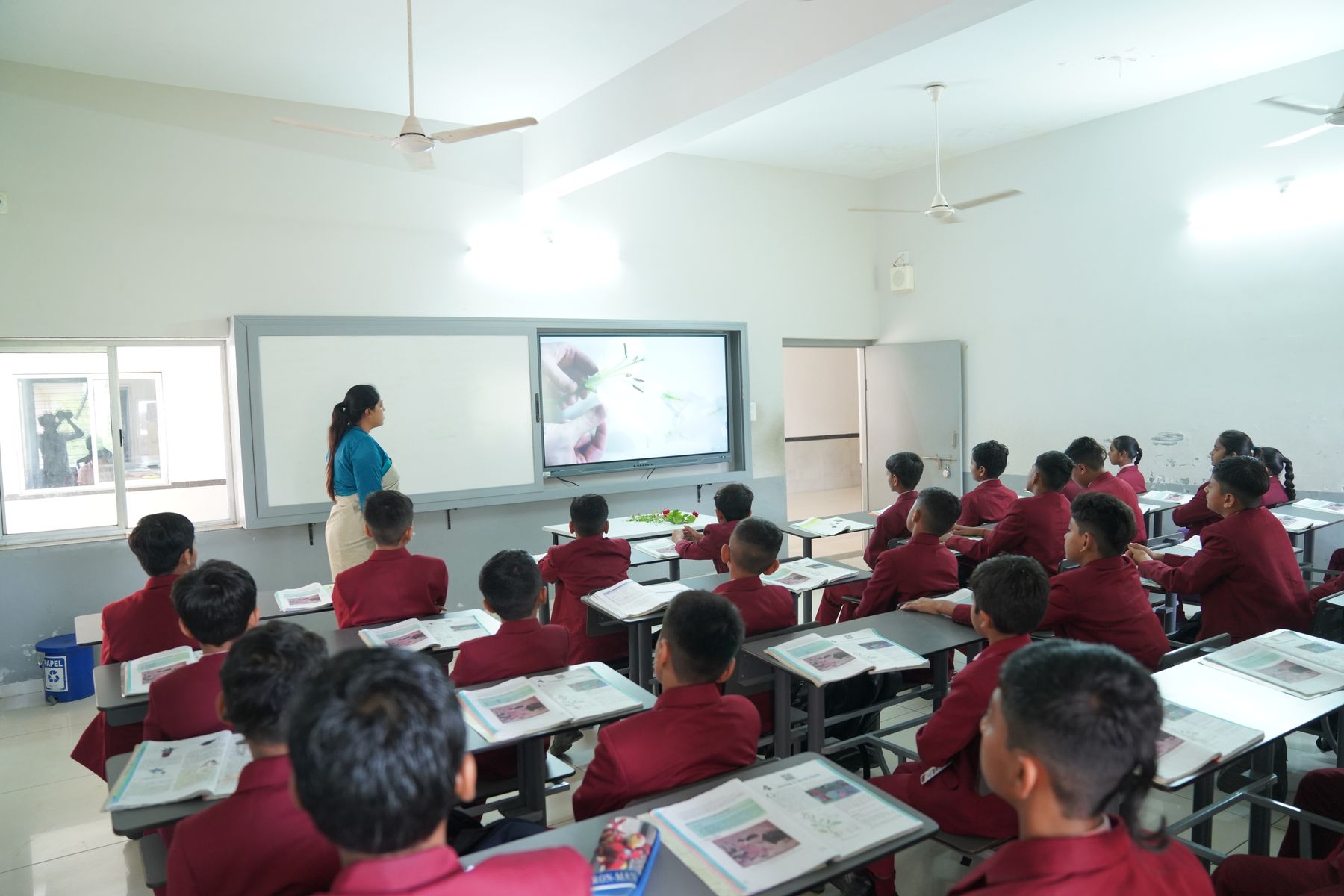
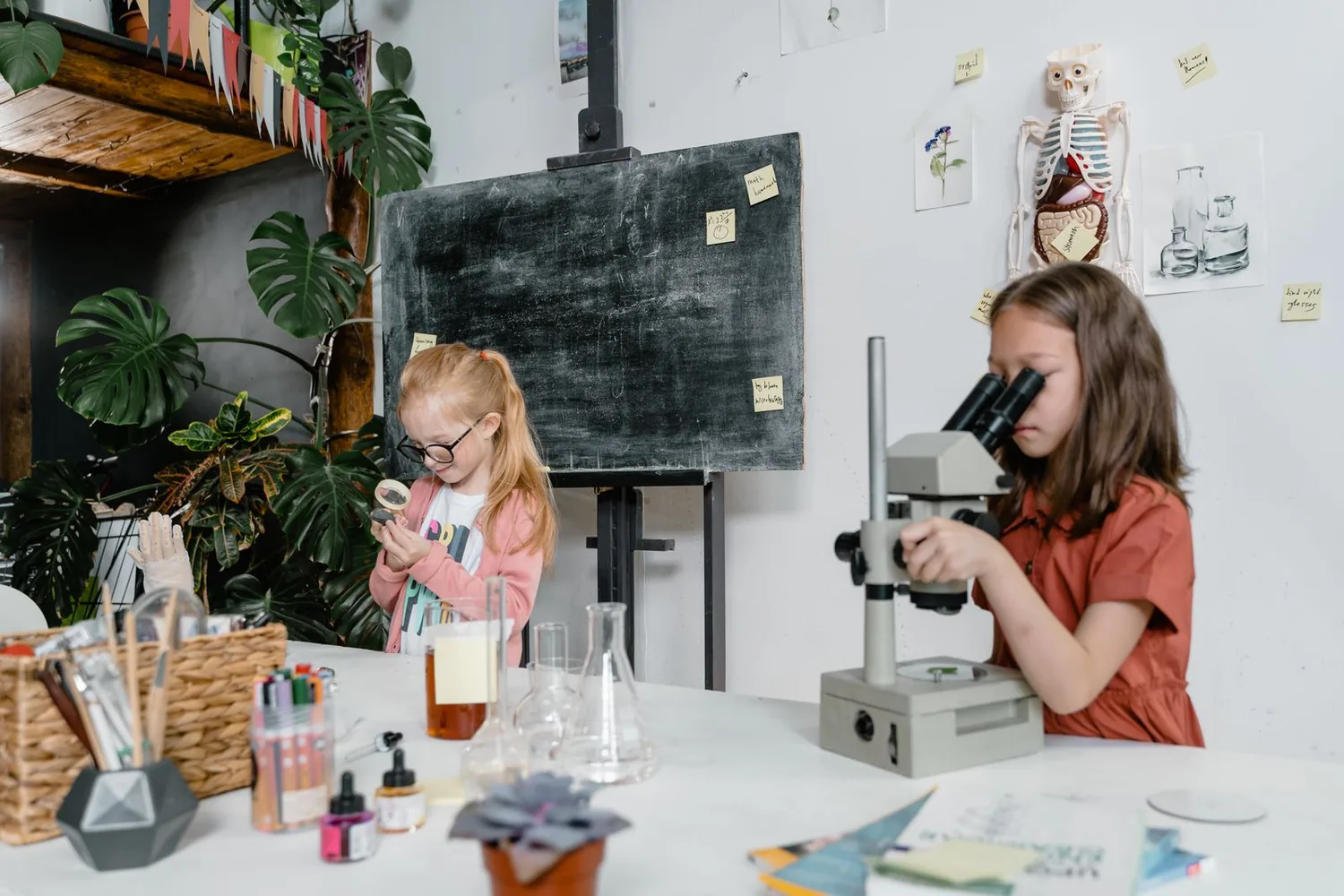
Pupils conducting an experiment in a classroom
Investigate
Pupils presenting a science project to their class
Share an idea

Illustrative learning scenes

The same student, a different way of learning

TechM4Schools exists because many students meet technology only in a textbook. The programme is designed to move them from reading about it to building with it.

  • How they learnBefore: Theory-focusedWith TechM4Schools: Maker-focused
  • Their role in classBefore: ListeningWith TechM4Schools: Building, testing and presenting
  • TechnologyBefore: Something to read aboutWith TechM4Schools: Robots, code and drones they work with
  • MistakesBefore: Something to avoidWith TechM4Schools: Part of the method
  • ConfidenceBefore: Unsure they can build anythingWith TechM4Schools: "I can do this"
  • CareersBefore: UncertainWith TechM4Schools: Mapped with CareerBuddy

Composite Skill Lab: five labs in one room.

The Composite Skill Lab is a single learning environment that gives students practical exposure to several technologies side by side.

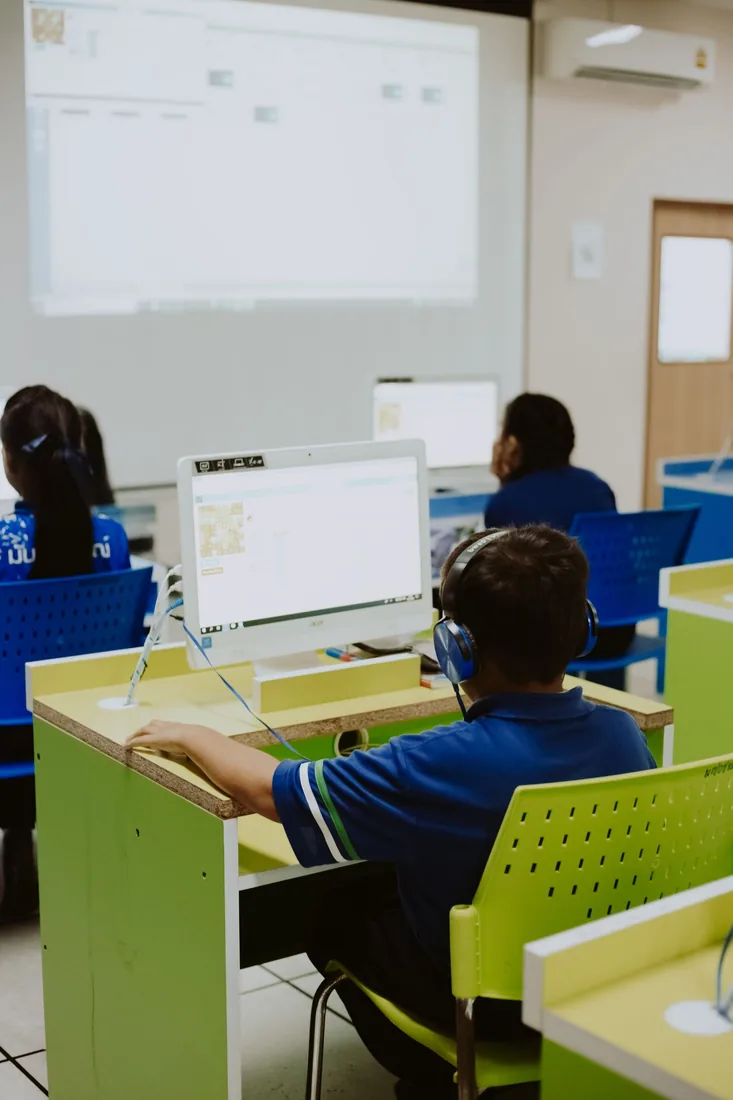
  • Pupils working together at desktop computers in a classroomLab 1

    Coding & programming lab

    Students develop logical thinking and computational skills by learning coding fundamentals, working in Python and JavaScript, and creating simple applications and games.

    • Practise logical thinking
    • Learn coding fundamentals
    • Write Python and JavaScript
    • Build simple apps and games

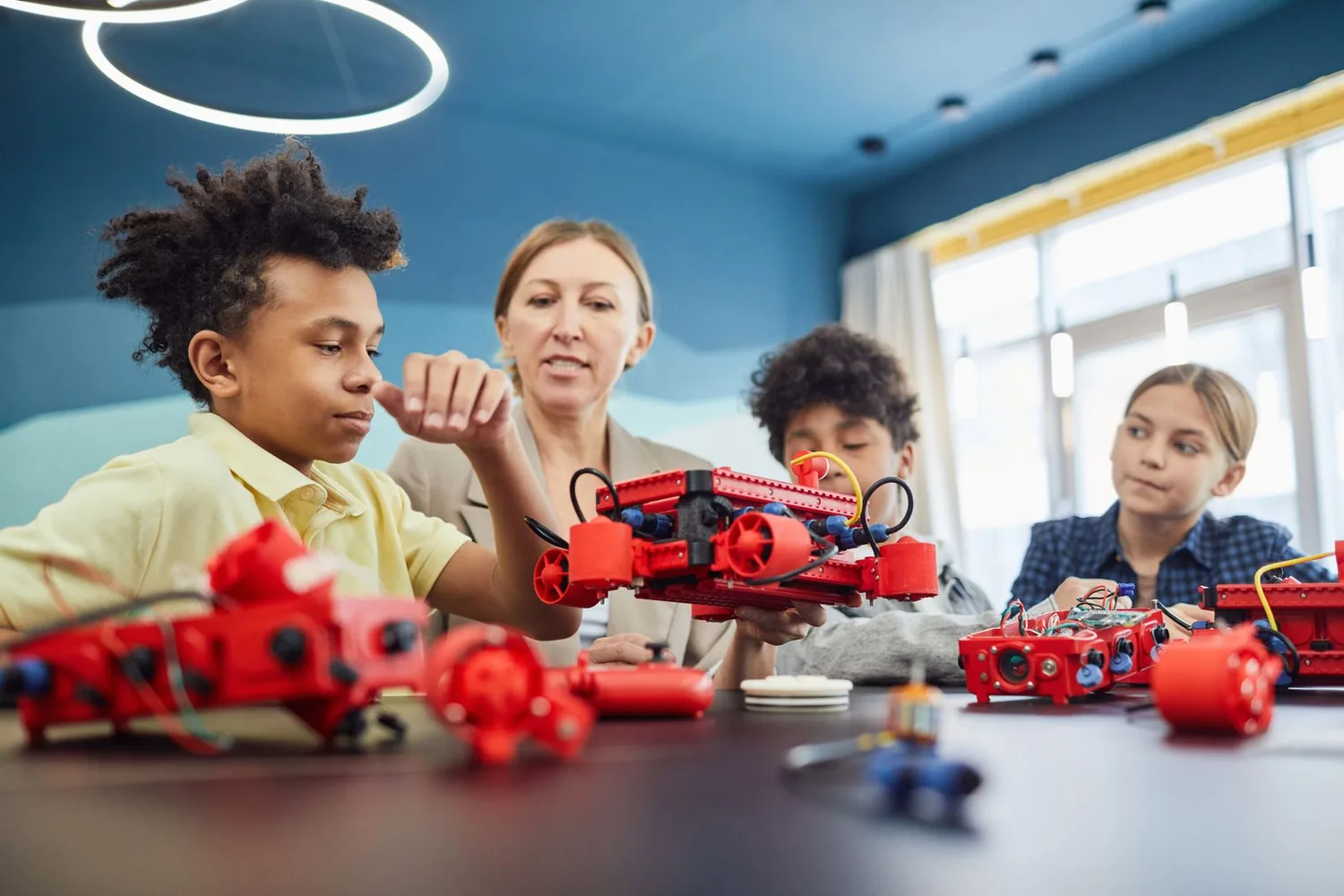
  • Pupils and a teacher assembling a small robot at a tableLab 2

    Robotics & automation lab

    Students learn robotics basics through hands-on projects: sensors, motors, circuit building, robot programming, automation concepts and solving problems as a team.

    • Work with sensors and motors
    • Build circuits
    • Program a robot
    • Explore automation concepts
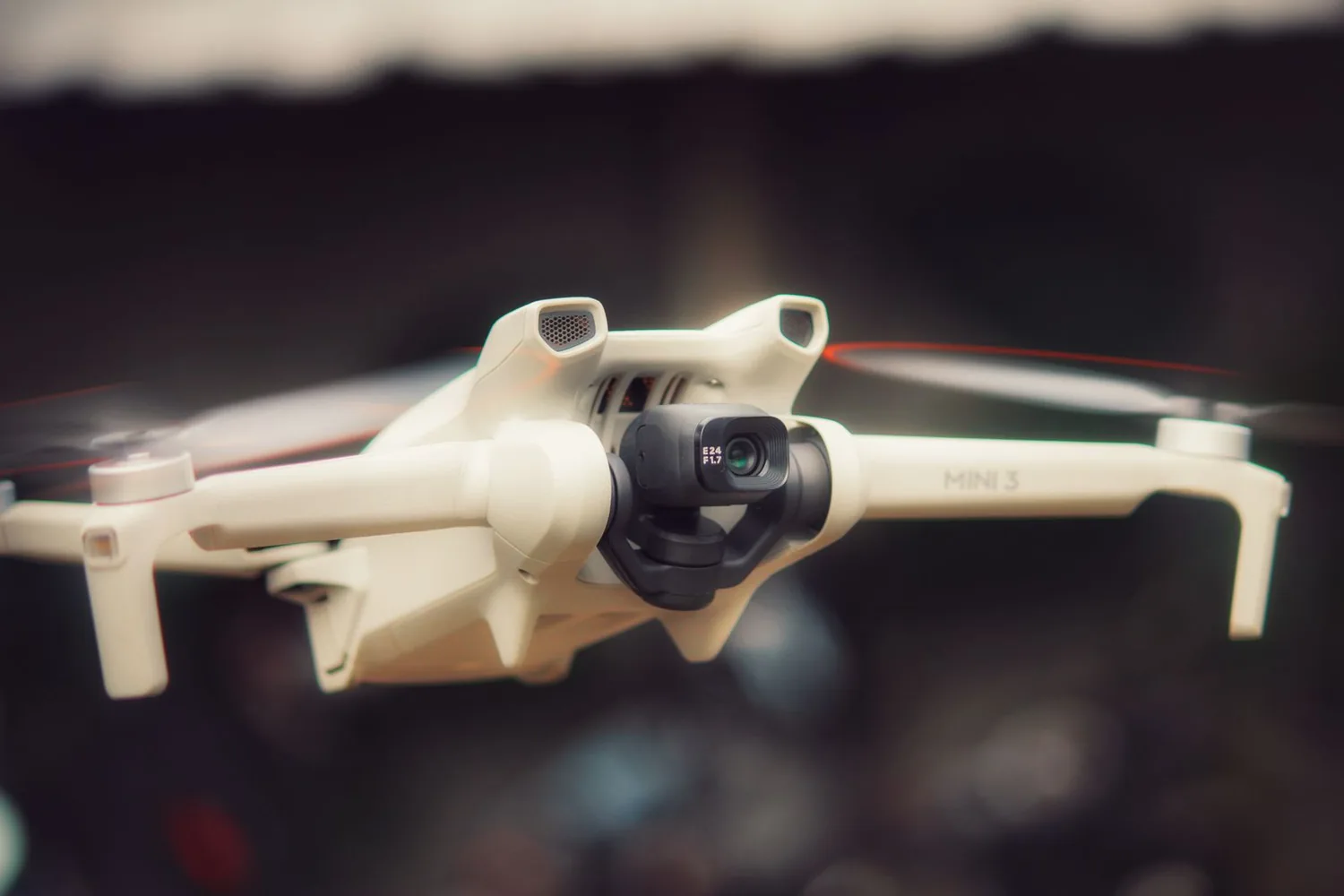
  • A small camera drone in flightLab 3

    Drone & aerial technology lab

    Students gain practical exposure to drone technology: flight principles, the components of a drone, safe flying practices and how aerial systems are used in industry.

    • Understand flight principles
    • Identify drone components
    • Learn safe flying practices
    • Study industry applications
  • Pupils collaborating around laptops in a classroomLab 4

    Artificial intelligence lab

    Students explore the fundamentals of AI, understand how intelligent systems work, build simple AI projects and consider real-world applications and the ethics around them.

    • Learn AI fundamentals
    • See how intelligent systems work
    • Build simple AI projects
    • Discuss applications and ethics
  • Pupils watching a 3D printer make a small objectLab 5

    Innovation & maker education lab

    Students apply design thinking, identify real-world problems, create prototypes and develop their own solutions through project-based learning.

    • Apply design thinking
    • Identify a real problem
    • Create a prototype
    • Develop a solution as a project

Illustrative lab photography

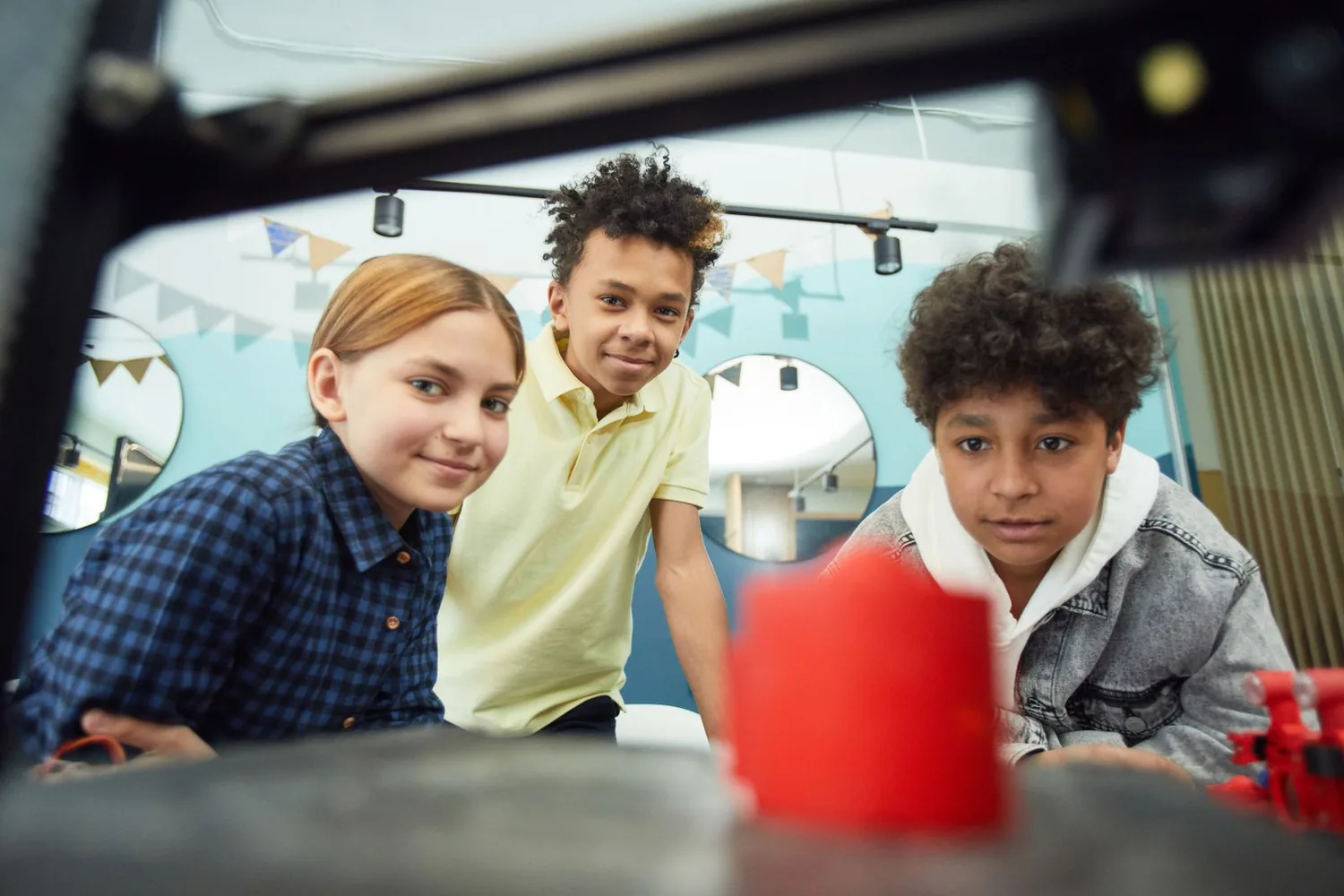
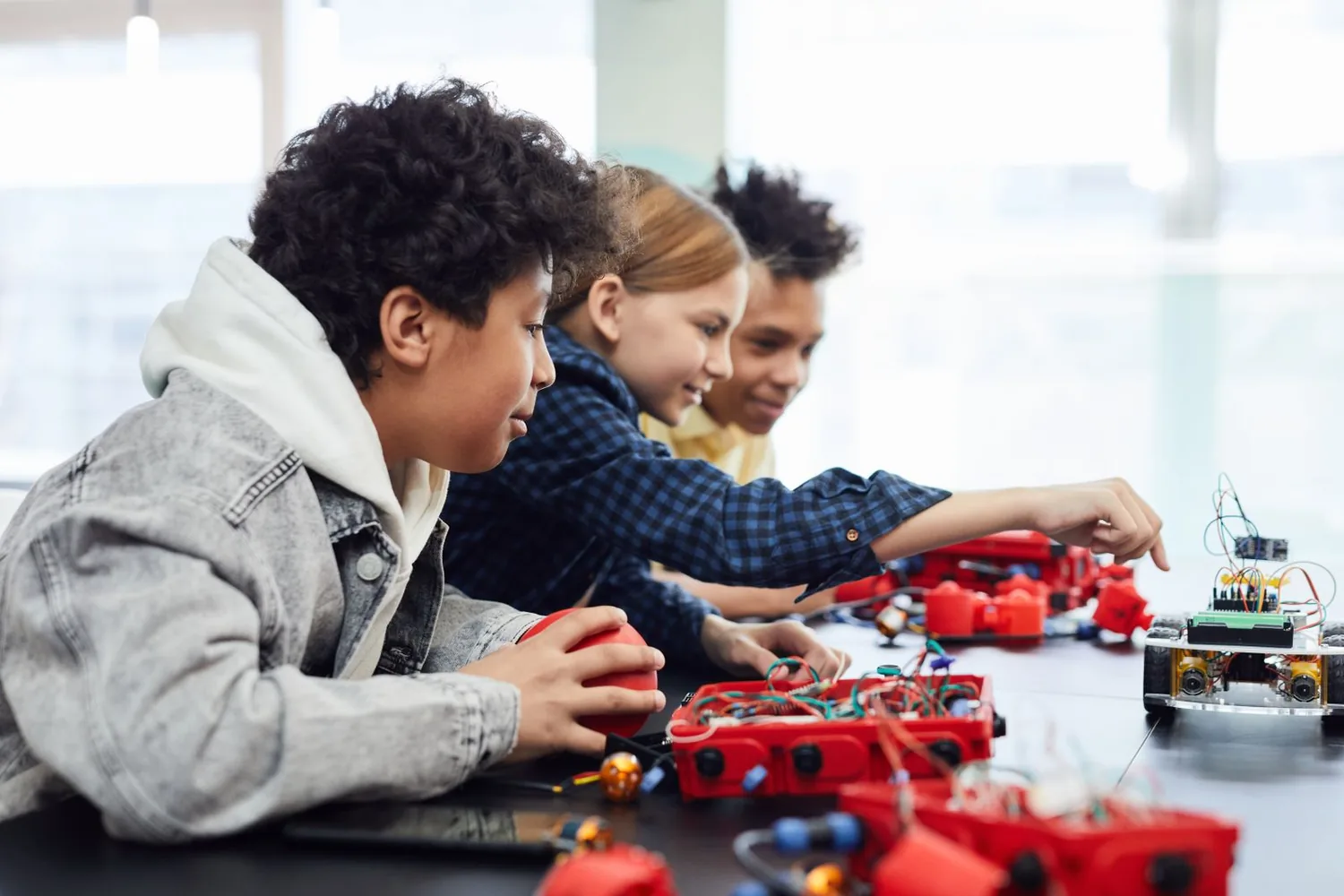
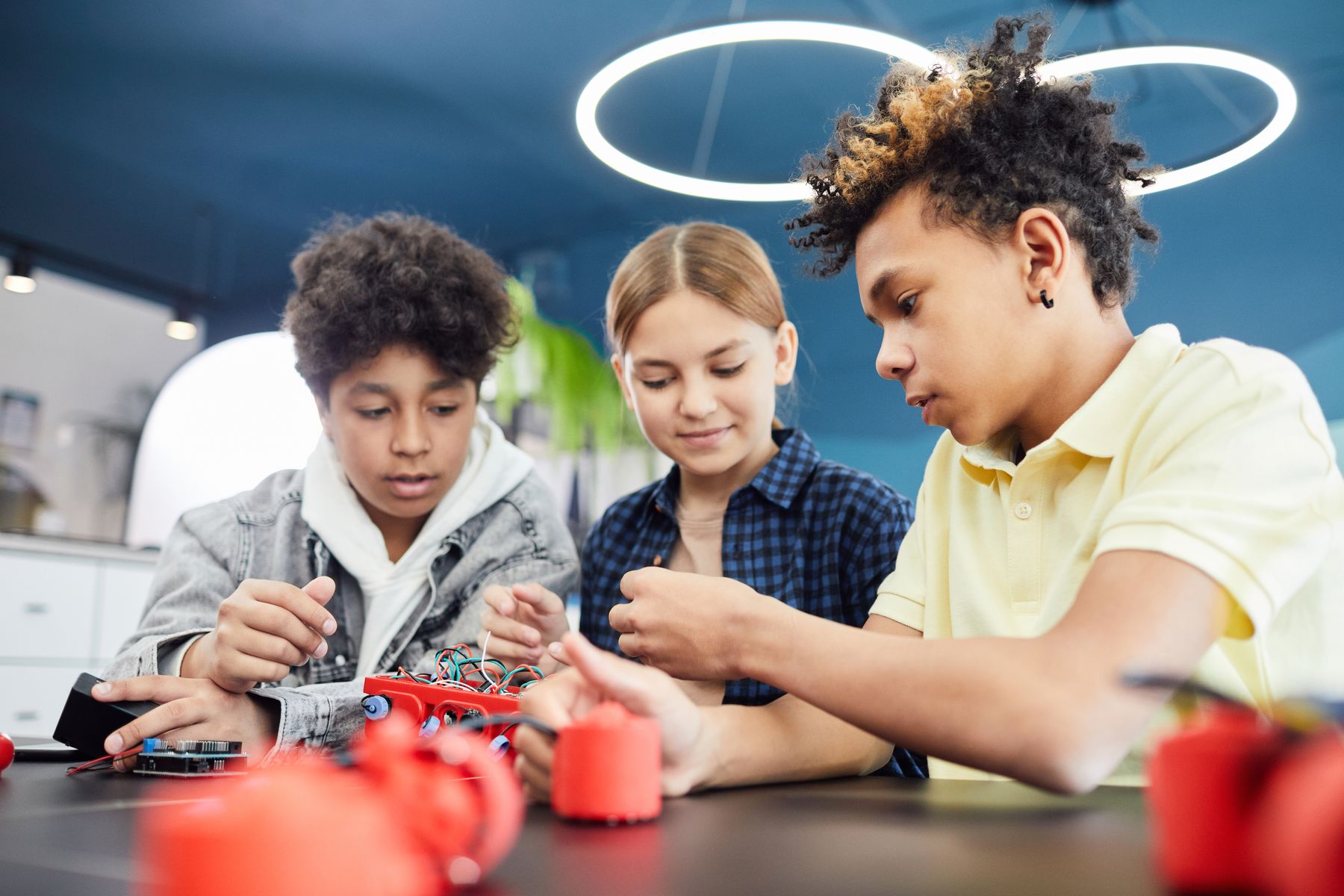
Three teenagers assembling a small wired robot together at a table

What the room can include

  • Tablets and workstations
  • 3D printers and interactive presentation platforms
  • STEM walls and learning models
  • AR/VR capabilities
  • Robotics, science and maths concept kits

The equipment for each lab is agreed with the school. A full list is shared on enquiry.

Our learning platforms

The labs are where students build. These two products keep the guidance and the administration around that work in one place.

Pupils using computers during a classroom lesson

CareerBuddy

Career discovery platform

Helps a student identify strengths, interests and future aspirations through assessments and personalised guidance, then relates them to subjects and possible careers.

  • AI-based assessments
  • Career exploration
  • Subject mapping
  • Career roadmaps
  • Future readiness programmes

SchoolOS

Digital school innovation ecosystem

The digital layer a school uses to manage and monitor its innovation initiatives: which programmes are running, who is taking part and what is planned next.

  • Programme management
  • Student profiles
  • Data insights and analytics
  • Event management
  • Collaboration tools

Innovation kits

Students get access to hands-on kits: robotics kits, coding kits, electronics modules and drone technology kits. They make it possible to keep building after the lab session ends.

  • Pupils working together with robotics components

    Robotics learning kit

    Build and program a robot using motors, sensors and a microcontroller.

  • Pupils using computers in a classroom

    Coding & electronics kit

    Work from a first LED to complete circuits, writing the code that drives them.

  • A small drone in flight

    Drone exploration kit

    Assemble, calibrate and fly a drone, and learn about aerodynamics, control and navigation.

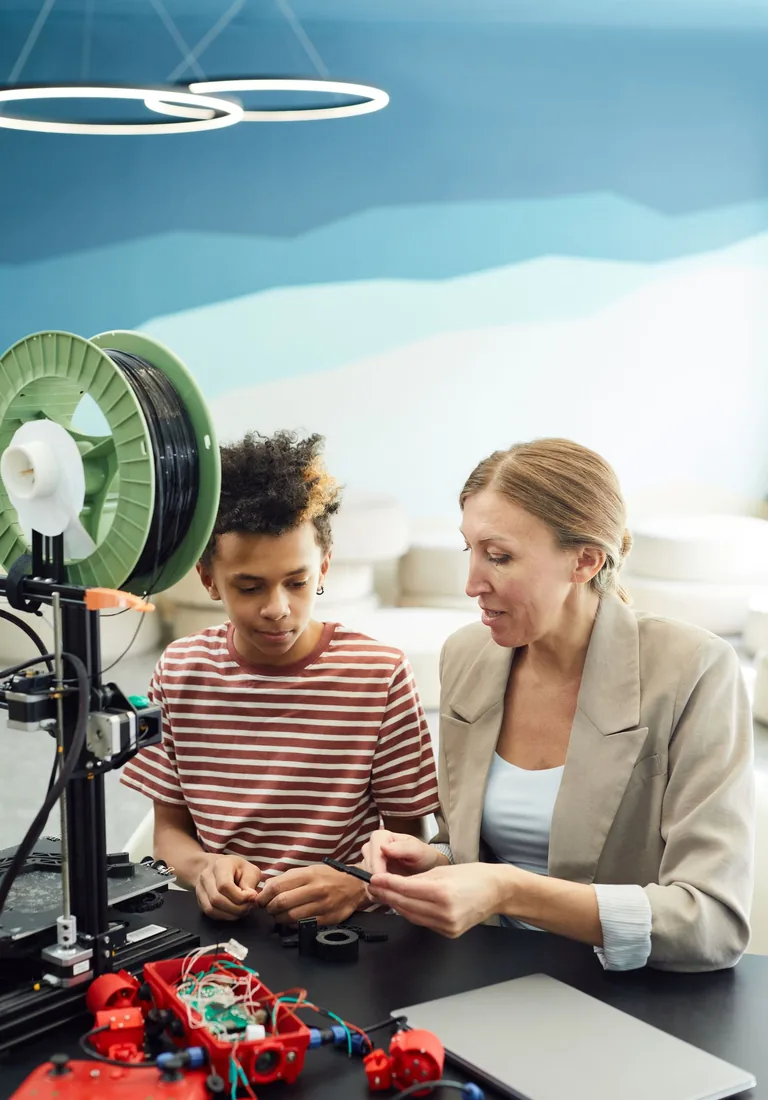
  • A mentor helps a pupil with a 3D printing project

    Innovation project kit

    Electronics components and open-ended project challenges for a student's own idea.

Kit contents are tailored by grade and shared on request.

Six programmes, one rhythm across the year.

Workshops, competitions, camps and projects designed to build creativity, collaboration and critical thinking in every student.

Through the year

  • Year-roundInnovation learning programmes
  • MonthlyTechnology exploration workshops
  • Awareness seriesFuture technology awareness
  • Seasonal, three weeksSummer innovation camps
  • Project-basedStudent project development
  • CompetitionNational innovation challenges

Programme buzz

In school

  • Innovation learning programmesYear-roundStudents tackle real-world challenges with technology, from solving a local problem to pitching a startup idea.
  • Technology exploration workshopsMonthlyHands-on workshops on a new technology each month: AR/VR one month, quantum computing basics the next, then blockchain.
  • Future technology awarenessAwareness seriesWhat is coming in AI, space technology and bioengineering, and how a student can be part of it.

Projects and competitions

  • Summer innovation campsSeasonal, three weeksDaily challenges, team competitions, hackathons, drone racing and robot battles.
  • Student project developmentProject-basedEvery student builds something real: an app, a robot or a working prototype, mentored by industry professionals.
  • National innovation challengesCompetitionStudents take their work to state and national innovation competitions.

What every student takes away

What each programme is designed to develop in a student.

  • Problem-solving

    Breaking a real problem down and working it through to an answer that works.

  • Technical confidence

    The belief, earned at the bench, that they can build with technology.

  • Critical thinking

    Asking why a design works, testing it and improving it.

  • Creativity

    Turning their own ideas into prototypes other people can use.

  • Collaboration

    Building in teams, sharing roles and presenting together.

  • Career clarity

    A clearer view of strengths, subjects and possible careers through CareerBuddy.

The student journey

No student moves through this at the same speed, and some stages are revisited many times. What stays constant is that each stage has something real behind it.

  1. 1

    Discovering technology

    A student meets a robot, a drone or a first line of code, and finds that technology is something they can work with, not only watch.

  2. 2

    Learning through structured programmes

    Curiosity becomes routine. Modules run inside the school timetable, so skills are practised regularly instead of once.

  3. 3

    Building projects and practical skills

    The student builds things that have to work: a circuit, a program, a robot. Mistakes become part of the method.

  4. 4

    Receiving mentorship

    A mentor looks at the work, asks harder questions and helps the student connect what they enjoy to what they could study next.

  5. 5

    Creating innovations

    The student stops following instructions and starts with a problem of their own, then prototypes an answer and puts it in front of others.

  6. 6

    Progressing toward a role

    With skills, finished projects and a clearer sense of direction, a student can begin to see the kind of role they want to grow into.

One student. Five directions.

Every student starts in the same place. Choose a direction to see how TechM4Schools can take a student there.

StartA student joins TechM4Schools
Labs and kitsCoding, robotics and AI labs
Projects and challengesMaker lab and competitions
Ideas and fundingInnovate Bharath
MentorshipTechM4India mentors and CareerBuddy
ExplorationWorkshops and awareness series
Pupils collaborating at a computer
Illustrative learning scene

Labs and kits · Coding, robotics and AI labs

Becoming a developer

  1. A student joins TechM4Schools.
  2. Writes a first program in the coding and programming lab.
  3. Builds apps and games in Python and JavaScript, and programs a robot.
  4. Ships a project of their own in student project development.
  5. Developer

Directions a student can grow toward, not promised outcomes.

Mentors who understand education

The people behind the programme.

  • Portrait of Dr. K. Sudheer Reddy
    Dr. K. Sudheer ReddyDean – Academics & Planning, Anurag University

    Provides strategic direction so that innovation becomes part of everyday education, bridging theoretical learning and practical application.

  • Portrait of Mahesh Mannuru
    Mahesh MannuruSenior Technical Lead, TechM4Schools

    Designs hands-on learning experiences that expose students to industry-relevant technologies and real-world engineering concepts.

  • Portrait of Mettu Raja Reddy
    Mettu Raja ReddySenior Technical Lead, TechM4Schools

    Builds innovation ecosystems that encourage creativity, problem-solving and future readiness among students.

  • Portrait of Elavala Bharath Reddy
    Elavala Bharath ReddySenior Technical Lead, TechM4Schools

    Supports the development of scalable educational platforms that improve learning experiences and help institutions work through technology.

Validated by academia and industry

Academic institutions and an industry body that have validated TechM4Schools. Schools can ask for references before they commit.

  • Anurag University (AU)

    Academic approval and lab support for TechM4Schools

    Validated
  • National Institutes of Technology (NITs)

    Academic validation of the TechM4Schools programme

    Validated
  • NASSCOM

    Industry validation of the TechM4Schools programme

    Validated

Implementation support for every partner school

  • Learning management system
  • Student workbooks
  • Teacher resources
  • A dedicated relationship manager
  • Ongoing lab maintenance

NEP 2020 alignment

Curriculum and credit pathways can meet institutions where they are.

Curriculum aligned with NEP 2020 and CBSE and State board requirements.

Bring TechM4Schools to your school

Tell us about your school, your grades and the space you have, and the team will plan a programme with you.

Opens WhatsApp with your message ready to send.

Enquiry form

Bring TechM4Schools labs, kits and programmes to your school.

Opens WhatsApp with your message ready to send.